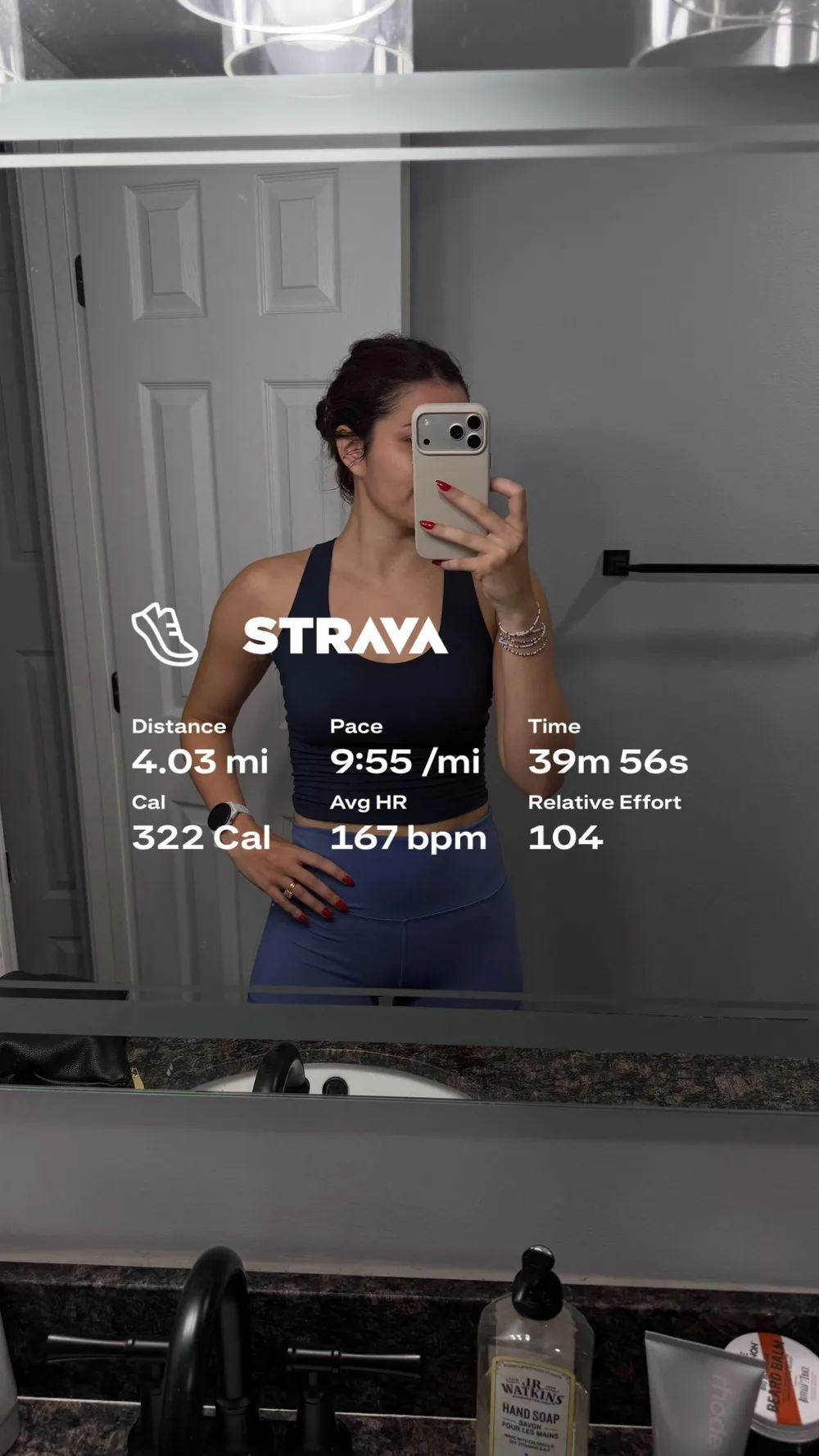
When I decided to train for a half marathon, I knew it probably wasn’t going to look like a normal training plan. I have POTS, along with other chronic health issues, so I went into this knowing I couldn’t just download a 16-week plan, follow it perfectly, and expect my body to cooperate. But I also didn’t really know what training would look like.
I started training in May for the Philadelphia Half Marathon in November. So far, I think the biggest thing I’ve learned is that training for something like this isn’t just about getting better at running. It’s about getting better at understanding your body.
I stopped treating the training plan like a rulebook
In the beginning, it was really easy to look at what I was “supposed” to do: run this many miles, run this many days, increase mileage, do a long run every week.
But POTS doesn’t really care what’s written on a training plan. Some days my body handles running surprisingly well. Other days, something that should be easy feels significantly harder.
So instead of asking, “What does the plan say I need to do today?” I’ve started asking, “What can my body actually handle today that still moves me forward?”
Sometimes that means running. Sometimes it means slowing down, moving the run to another day, doing it inside on the walking pad instead of outside, or sometimes just resting.
I’m learning that modifying the plan doesn’t mean I’m not following the plan. The modifications are part of the plan.
The Florida heat changed everything
I started training in May, which means a huge portion of my training has fallen during a Florida summer. Heat is already difficult for a lot of runners, but with POTS, it can be a completely different situation.
Heat can make my symptoms significantly worse, and I quickly realized there was no prize for forcing myself to run outside just because that’s what “real runners” do. So I adapted.
A lot of my runs have been indoors on my walking pad. It maxes out around 4 mph, so these aren’t fast runs, but I can control the temperature, have electrolytes nearby, stop if I need to, and get the miles in without asking my body to simultaneously deal with running and extreme heat.
That walking pad has probably been one of the biggest reasons I’ve been able to stay consistent.
Electrolytes aren’t an afterthought for me
Hydration has become part of the workout itself. I usually have electrolytes before running and keep paying attention to fluids afterward. I’ve used things like Propel, Re-Lyte, SaltStick and even pickle pouches depending on what I need.
I’ve also learned that I do better when I don’t wait until I feel terrible to start thinking about hydration. Preparing before the run matters.
Compression helps
I use knee-high compression socks when I run, and they’ve become one of those things I don’t really question anymore.
Are they going to magically make POTS disappear while I run? Obviously not. But anything that can help support circulation is worth having in my running toolbox, and I notice enough of a difference that I continue using them.
Strength training has become part of half marathon training too
Running isn’t the only thing I’m doing. I’ve been incorporating strength training and Pilates into my week too, and my schedule has generally included a mix of running, lower-body strength, upper-body or full-body strength, core work and Pilates.
For me, the goal isn’t to cram as much exercise as possible into one week. It’s to build a body that can tolerate 13.1 miles.
That means stronger legs, stronger glutes, stronger calves, a stronger core and hopefully a body that’s a little more resilient when race day gets here.
Then my training got interrupted completely
One thing I definitely didn’t include in my half marathon training plan was a motorcycle accident.
In August, I crashed my motorcycle and injured my knee. Suddenly the question wasn’t how I was going to increase my mileage. It was when I was going to be able to run again.
I ended up taking close to a month away from running, and mentally, that was hard. When you’re training for something with a specific date attached to it, losing several weeks feels enormous. There’s this immediate temptation to start calculating everything you’ve missed and figuring out how quickly you can make it up.
But I’ve had to remind myself that I cannot cram missed training into the weeks I have left. That’s probably one of the most important things I’ve learned: you don’t “make up” missed miles. You start from where your body is now.
My first real run back was 3.1 miles on my walking pad. It wasn’t fast, and it wasn’t some incredible comeback workout, but I ran three miles again. At that point, that was enough.
I’ve had to redefine what progress looks like
Before all of this, it would have been easy for me to measure running progress by pace. Am I faster? Can I run farther? What was my average mile?
Now I look at a lot more than that. Could I finish the distance without completely wiping myself out? How did I feel afterward? How did I feel later that day? What happened to my symptoms? Did I recover well enough to train again? Did I eat enough? Did I hydrate beforehand? Did my knee tolerate it?
Sometimes the win isn’t running faster. Sometimes the win is realizing I finished a run and still had enough energy left to live the rest of my day.
Fueling matters more than I expected
I’ve also become much more intentional about eating around my runs. A banana and electrolytes before a run has become a pretty easy option for me. Afterward, I try to get protein and carbohydrates in rather than just finishing the workout and moving on with my day.
I’ve also been taking creatine and prioritizing protein while strength training.
None of these things individually feel groundbreaking, but that’s another thing this process is teaching me. The boring little things add up: hydrate, eat, sleep, strength train, run, recover, repeat.
I’m learning the difference between discomfort and a warning sign
This one has probably taken the most practice. Running isn’t always comfortable. Your legs get tired, your breathing gets harder, and your brain tells you that stopping would feel really nice.
But having a chronic illness adds another layer because sometimes your body actually is telling you something important. I’m still learning where that line is.
I don’t want to stop every time something feels difficult, because part of training is teaching your body to tolerate difficult things. But I also don’t want to ignore my body just to prove that I can follow a training plan.
There is a difference between pushing yourself and fighting your body. I’m still learning it.
What has helped me the most so far
If I had to narrow everything I’ve learned down, the things that have helped aren’t particularly complicated: electrolytes before I need them, compression, running indoors when the heat isn’t worth fighting, strength training, Pilates, eating before and after runs, keeping easy runs actually easy, being willing to rearrange my week, and not trying to make up missed mileage.
Probably most importantly, consistency over perfection.
My training hasn’t been perfect. Not even close. I’ve missed runs. I’ve changed workouts. I’ve had POTS symptoms. I’ve dealt with Florida heat. I’ve gotten hurt. I’ve taken weeks off. I’ve restarted.
And I’m still training.
I still have a long way to go
The Philadelphia Half Marathon is in November, and 13.1 miles still feels pretty big from where I’m standing right now. I’m not at the point where I can confidently say, “Yep, I’ve got this.”
But maybe that’s part of why I’m documenting it now instead of waiting until after the race. I don’t know exactly how this story ends yet. I’m figuring it out in real time.
My goal isn’t to run the fastest half marathon. It’s to get myself to that starting line healthy enough to attempt it, manage my body intelligently for 13.1 miles, and cross the finish line.
This race is also bigger than just proving to myself that I can run 13.1 miles. I’m running with Team Uplifting Athletes and raising money and awareness for the rare disease community.
So every weird walking-pad run, every electrolyte packet, every modified workout, every setback and every mile is eventually taking me toward the same place: Philadelphia, 13.1 miles, and hopefully a finish line.
Philadelphia Half Marathon / 2026
Running with Team Uplifting Athletes.
Every mile of this is also raising money and awareness for the rare disease community. If you want to be part of the reason I get to that starting line, this is the place.